
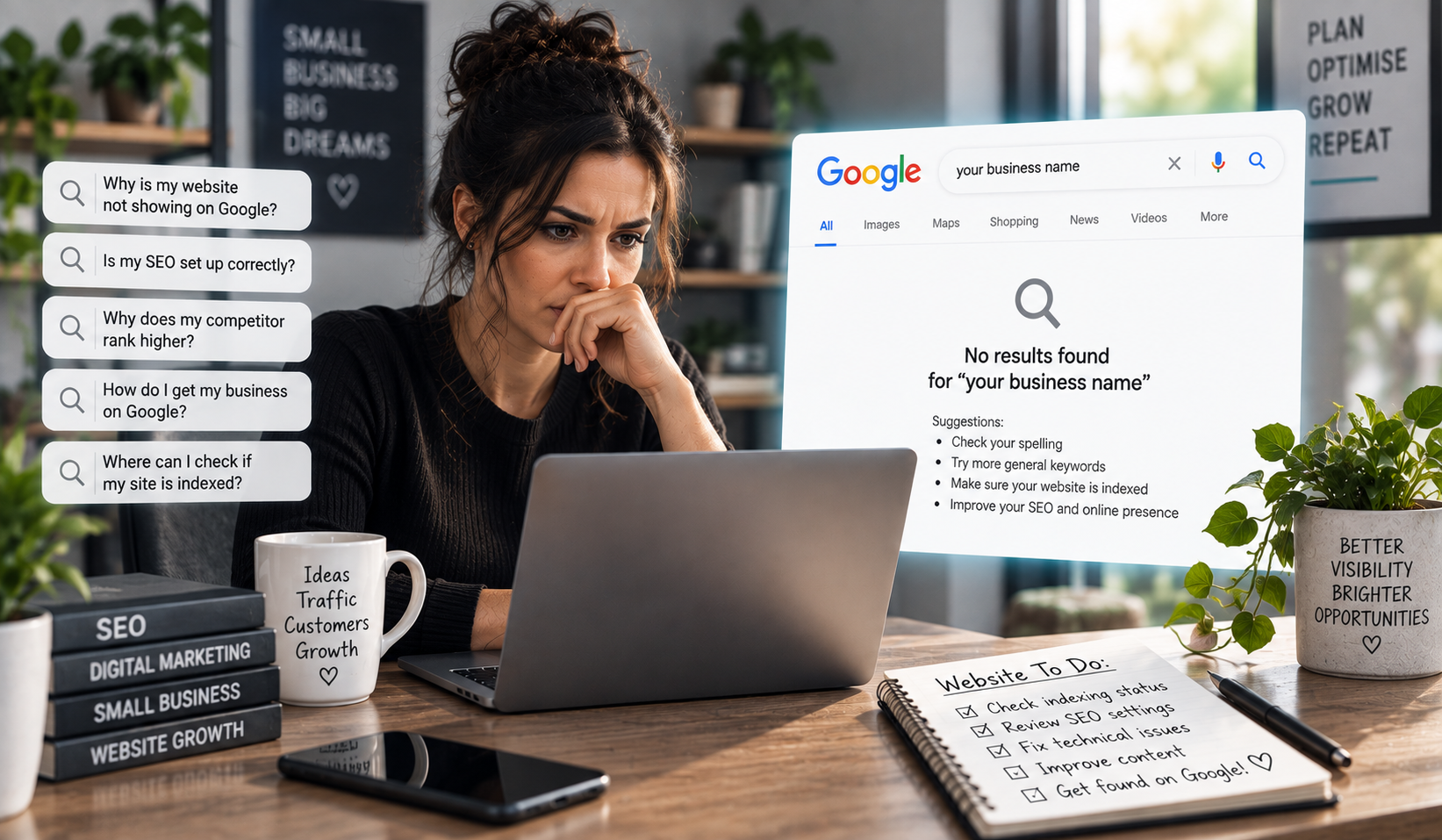
How to Get to the Top of Google Search
So you are looking at how to get to the top of Google search? You search for the product or service your business provides.
Your competitors appear.
You scroll.
And scroll.
Your business is nowhere to be seen.
It is understandably frustrating, especially when you know your company offers exactly what the person searching is looking for.
You may immediately start wondering how to get to the top of Google search, but there is an important question to answer first:
Is your website actually missing from Google, or is it indexed but ranking much lower than you expected?
Those are two very different problems.
A website that Google cannot crawl or index may have a technical issue.
A website that is indexed but sits far below competitors may have problems involving relevance, content, authority, website structure or competition.
Google itself explains that appearing in its index does not guarantee that a page will appear prominently for a particular search. Its systems assess pages based on relevance, quality and many other factors.
So before throwing more keywords at the problem, it helps to work out why your business is being overlooked.
First: Is Your Website Missing or Just Ranking Poorly?
This is the quickest distinction to make.
If you search for your business name and cannot find the website at all, there may be an indexing or technical problem.
However, if you search for:
“accountant Manchester”
and your website is sitting several pages below your competitors, Google probably knows the website exists.
It simply is not choosing it as one of the strongest results for that search.
Google Search Console is much more useful for diagnosing this than repeatedly Googling yourself.
Its URL Inspection tool can show whether Google has indexed a particular page, whether crawling was successful and whether something is preventing indexing.
Once you know which problem you have, the mystery becomes considerably less mysterious.
Here are ten common reasons your business may not be showing where you expect.
1. Google Hasn’t Found or Indexed Your Page Yet
Let us start with the simplest possibility.
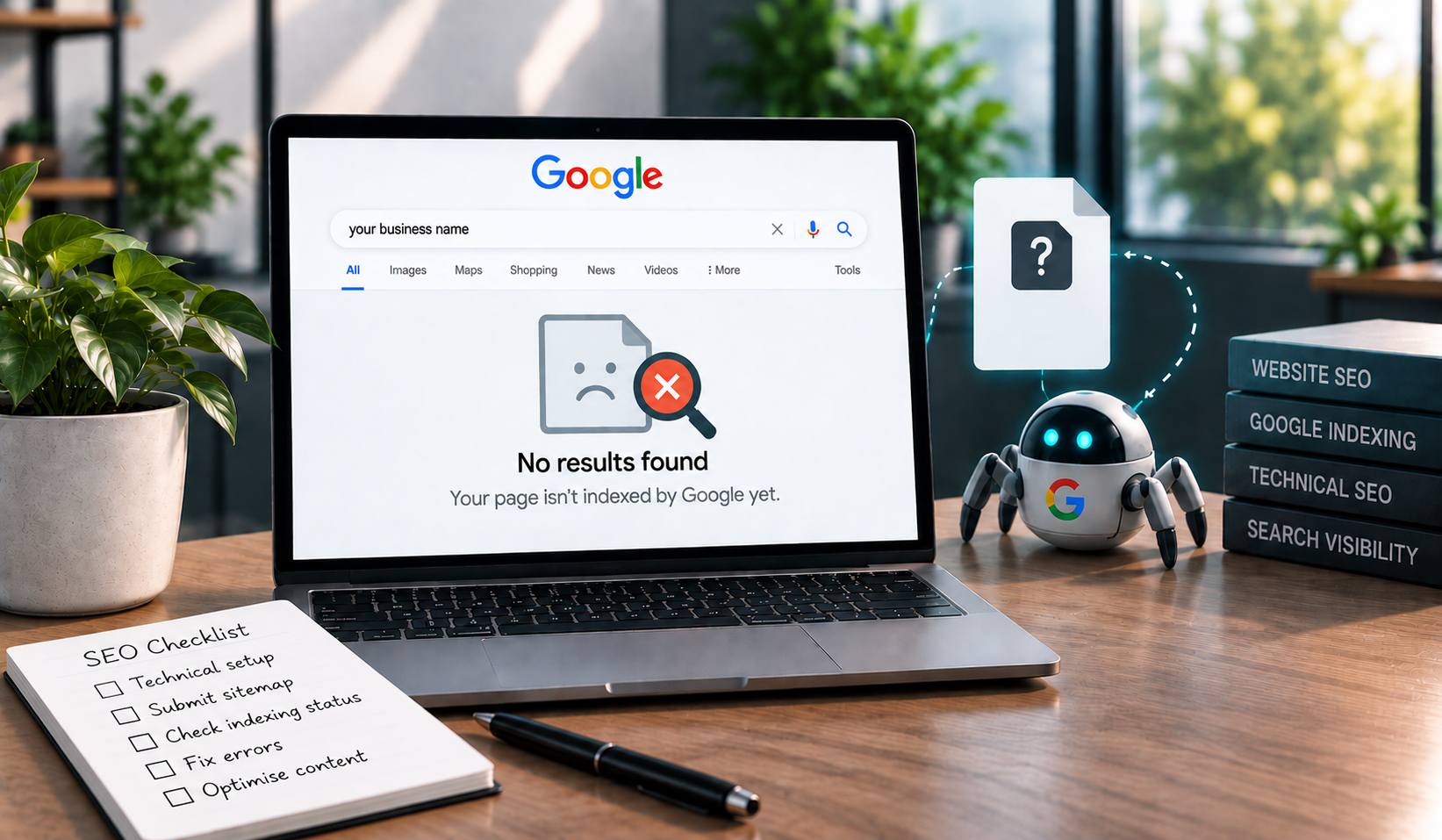
Google cannot rank a page it has not indexed.
Google discovers much of the web automatically using crawlers that follow links between pages. New websites and new pages can therefore take time to be discovered and processed.
This is particularly common when:
- Your website is brand new
- A page was only recently published
- Nothing else on your website links to the page
- Your sitemap does not contain the new URL
- Google has not crawled the site recently
This does not necessarily mean anything is wrong.
Google specifically says crawling and indexing take time and cannot be guaranteed within a particular period. Even submitting a sitemap does not guarantee indexing.
How do you know?
Check the page using Google Search Console’s URL Inspection tool.
If Google has not discovered it, that is a very different SEO problem from a page that is already indexed but ranking poorly.
That is why the first step should be diagnosis rather than immediately rewriting the page.

2. Your Website May Be Accidentally Blocking Google
Sometimes the problem is not that Google cannot find the website.
The website is effectively telling Google:
“Please don’t include this page.”
This can happen through settings such as:
- A
noindexdirective - Robots.txt rules
- Password protection
- Login requirements
- Incorrect website configuration
This occasionally happens after a website has been redesigned.
A development site may correctly be hidden from search engines while it is being built, but the restriction is accidentally left in place when the new website goes live.
Google specifically recommends checking robots.txt and noindex rules when a page is not appearing in Search.
Why this one matters
You could have brilliant content, strong branding and a beautiful website.
If important pages cannot be indexed, none of that gives Google a page it can properly serve in search results.
This is one reason technical SEO services often begin by checking accessibility and indexing before touching content.
There is little point repainting the front door if Google cannot get through the gate.

3. Your Page Does Not Clearly Match What People Are Searching For
Now suppose the page is indexed.
The next question becomes:
Why would Google choose it for this particular search?
Google’s systems look for pages that are relevant to what the person has asked. Its Search Essentials recommend using the words people use when looking for your content in important places such as page titles, main headings, alt text and link text.
Consider a business offering commercial cleaning in Birmingham.
Its homepage might say:
“Creating cleaner spaces through exceptional solutions.”
Perfectly pleasant.
However, it gives Google and the visitor surprisingly little concrete information.
Compare that with:
Commercial Cleaning Services for Businesses in Birmingham
The second version immediately communicates:
what the service is, who it is for and where it is offered.
That does not mean stuffing the phrase “commercial cleaner Birmingham” into every paragraph.
It means making the page genuinely clear.
This is where many businesses go wrong
They write websites from the perspective of someone who already understands the company.
Google and a first-time visitor do not have that context.
Your pages need to explain what you actually offer.
4. Your Content May Not Be Strong Enough to Compete
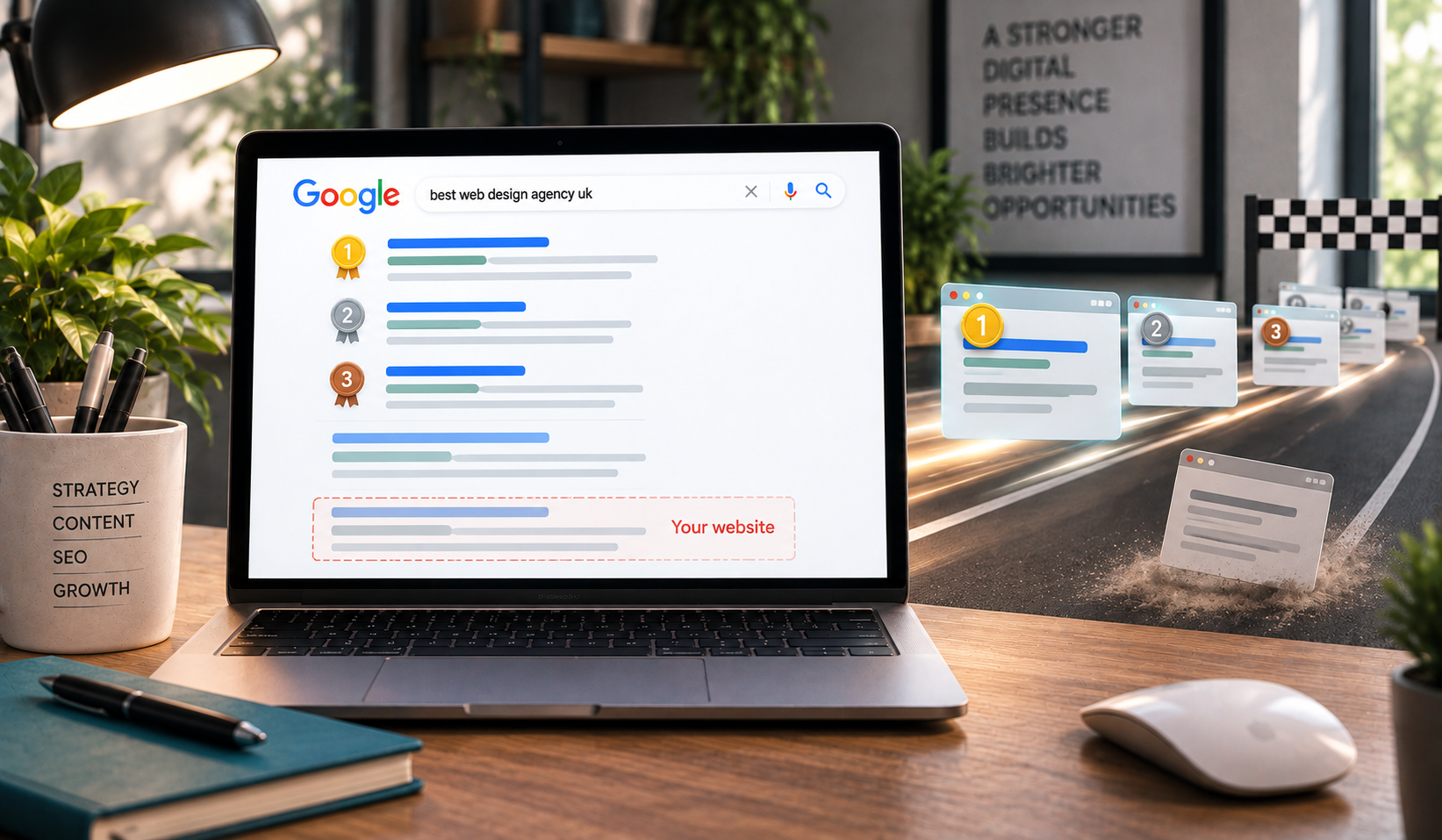
This is where the question “why does my competitor rank higher?” becomes useful.
Open your page.
Then open the pages ranking above it.
Do not just compare how pretty they are.
Ask what information the searcher gets from each page.
Does your competitor explain the subject more thoroughly?
Do they answer questions you ignore?
Do they demonstrate greater experience?
Do they provide examples?
Is their page genuinely more useful?
Google says its ranking systems are designed to prioritise helpful, reliable, people-first content, including content that provides substantial value rather than simply repeating what already exists elsewhere.
This does not mean every service page needs to become a 4,000-word essay.
Google explicitly says it does not have a preferred word count.
The better question is:
Does this page give the person enough useful information to solve the reason they searched?
If your competitor does that better, simply adding another paragraph containing your target keyword may not change much.

5. Your Website Structure Makes Important Pages Hard to Find
Google discovers many pages by following links.
That means the structure of your website matters.
Imagine you have an excellent service page, but it is:
- Not linked from your main navigation
- Not linked from related articles
- Buried several levels deep
- Completely isolated from other useful pages
Google may still discover it through a sitemap, but you are not giving either search engines or visitors a particularly clear route to it.
Google’s SEO guidance explains that links are an important way it discovers new pages.
Internal linking also helps show how your pages relate to one another.
For example, an article explaining SEO services might naturally connect to:
Technical SEO
Local SEO
AI Search Optimisation
SEO audits
and your main SEO service page.
Together, those relationships make the website easier to navigate and understand.
Think of your website as a network, not a filing cabinet
Important pages should not sit alone waiting for someone to stumble across them.
A sensible website structure connects related information logically.
That helps customers too.

6. Your Competitors May Simply Have Stronger Search Authority
Sometimes there is no dramatic technical disaster.
Your competitors simply have a stronger online presence.
Google discovers information about pages and businesses from across the web. Links between websites have long been part of how Google’s systems understand and discover content.
A competitor may have:
- Been established online for longer
- Earned more relevant coverage
- Attracted useful links naturally
- Published stronger resources
- Built greater visibility within the industry
- Been mentioned by credible websites
- Developed a stronger topical presence
This does not mean you should race out and buy hundreds of backlinks.
In fact, Google’s spam policies prohibit manipulative link schemes intended to artificially influence rankings.
Strong authority is usually built rather than purchased in a suspicious-looking spreadsheet for £29.99.
For businesses, useful PR, genuinely valuable content, partnerships and industry visibility can all contribute to a healthier online presence over time.
7. Poor Website Experience May Be Working Against You
SEO is not only about words on a page.
People need to use the website too.
Google’s core ranking systems consider signals connected with overall page experience, including Core Web Vitals. However, Google is very clear that there is no single page-experience score that guarantees rankings.
Areas worth paying attention to include:
- Loading performance
- Mobile usability
- Visual stability
- Responsiveness
- HTTPS
- Intrusive pop-ups
- Whether the main content is easy to use
A slow website will not automatically vanish from Google.
Likewise, achieving a perfect speed score will not suddenly launch a weak page into first place.
But when several relevant pages are competing for attention, a poor experience is hardly helping your case.
Google’s own guidance recommends thinking about the overall experience, not chasing one technical score in isolation.
8. You May Be Looking at a Local SEO Problem
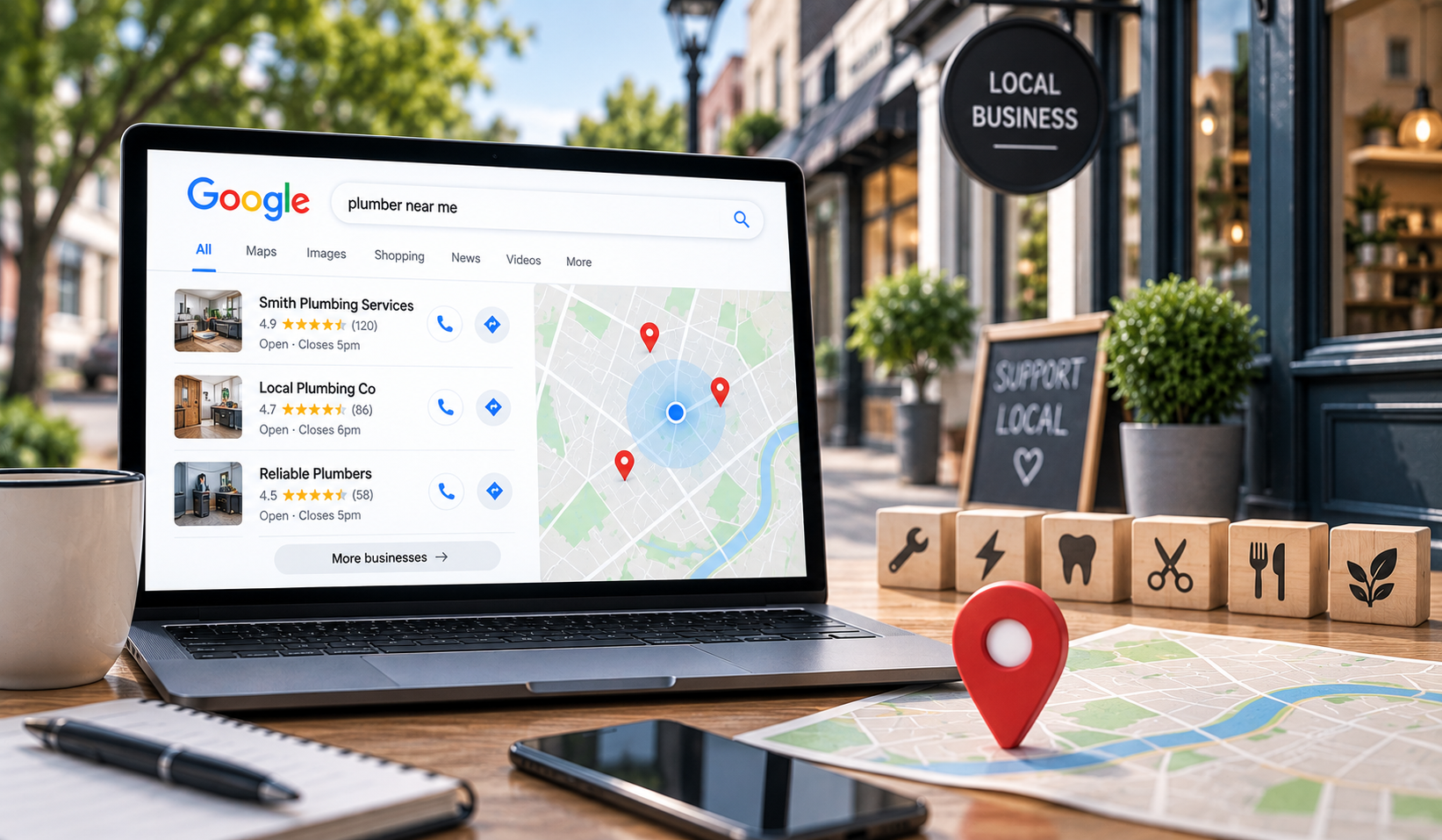
For local businesses, “showing up on Google” can mean something slightly different.
You might rank organically but barely appear in:
Google Maps
or Google’s local business results.
That brings Local SEO into the picture.
Google says local results are primarily based on:
Relevance
Distance
Prominence
It also recommends keeping your Business Profile verified, complete and accurate.
So if somebody searches:
“dentist near me”
your website SEO is only part of the picture.
Your Google Business Profile, location, category, reviews and wider local presence may also influence how visible your business is locally.
This matters especially for service businesses
A plumber, solicitor, restaurant or physiotherapist usually cares about being found by people within a realistic service area.
They do not simply need “more traffic”.
They need relevant visibility in the right places.
That is why general SEO and Local SEO often need to work together.

9. A Website Redesign or Migration May Have Created Problems
Did your visibility drop after launching a new website?
That timing deserves attention.
Website migrations can create SEO problems when:
- Old URLs change without proper redirects
- Pages disappear
- Internal links break
- New pages are accidentally blocked
- Canonical tags are wrong
- Sitemaps still contain old URLs
- Important content is removed
- HTTP and HTTPS versions are mishandled
Google’s current migration guidance specifically warns about mistakes such as forgotten noindex rules, robots.txt restrictions, incorrect redirects and outdated sitemaps.
A new website can look significantly better while performing significantly worse in search.
That is why SEO should ideally be considered before, during and after a major website move.
If rankings disappeared around the same time as a redesign, that correlation is worth investigating.
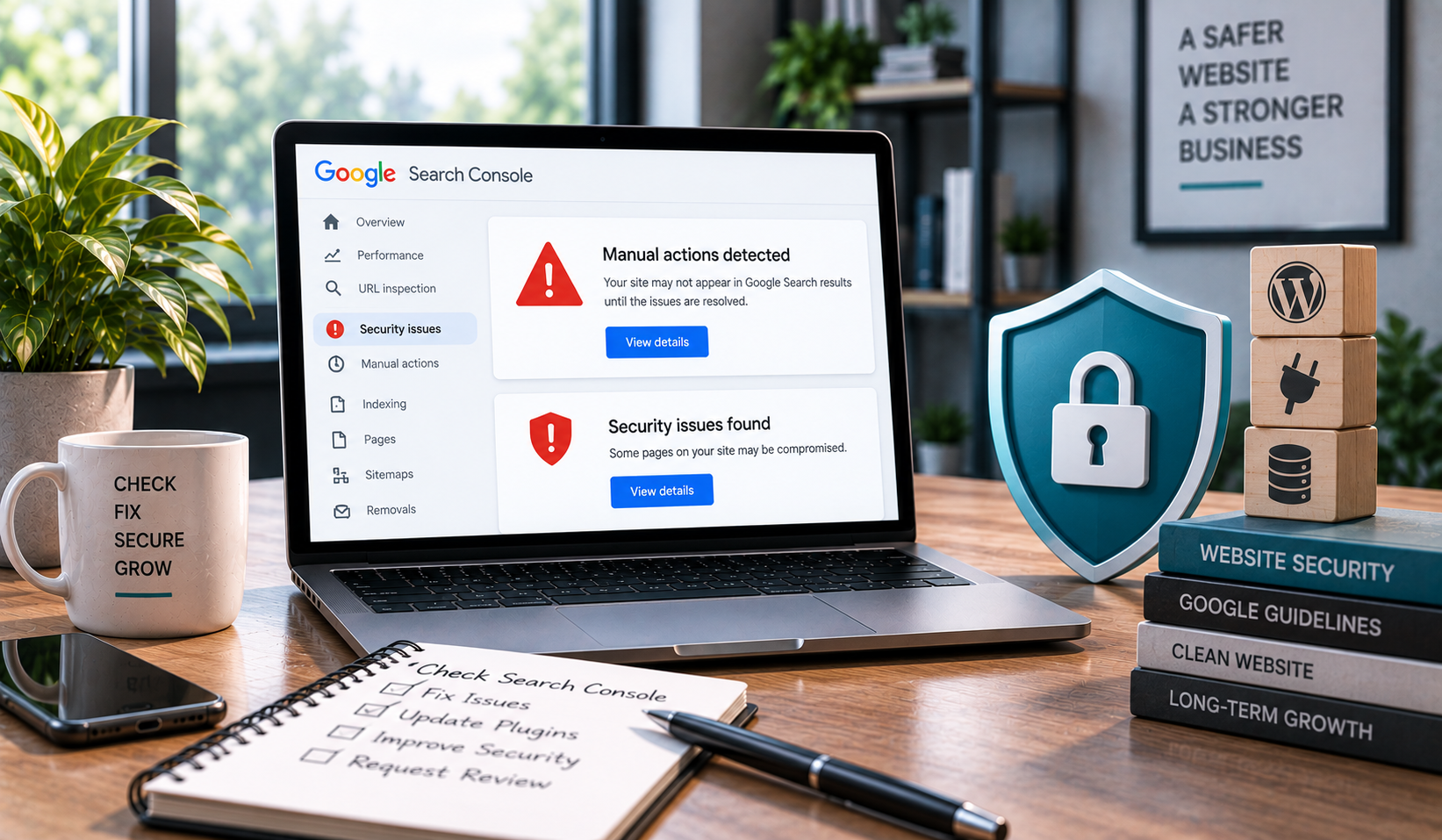
10. Your Website Could Have a Manual Action or Security Problem
This is less common than the earlier reasons, but it is important.
Google may take a manual action when a human reviewer determines that a website violates its spam policies.
Depending on the issue, affected pages or even the entire site can rank lower or disappear from Google Search.
Security problems can also affect how a website appears.
For example, hacked pages, malware or phishing behaviour may result in warning labels or other restrictions.
Fortunately, you do not need to guess.
Google Search Console includes dedicated:
Manual Actions
and
Security Issues
reports.
If those reports are clear, you can usually move on and investigate more common causes.
So, How Do You Get to the Top of Google Search?
This is where we need to remove one particularly stubborn SEO myth.
There is no checklist that guarantees the top position.
Google itself says there are no secrets that automatically rank a website first.
That does not mean SEO is random.
It means the answer to how to get to the top of Google search depends on what is currently preventing your website from competing.
For one business, the biggest issue may be technical.
For another, it may be weak service pages.
Another may have poor local visibility.
Another might simply be competing against companies with much stronger content and authority.
That is why copying a generic “30 SEO tips” checklist can waste a remarkable amount of time.
The priorities need to match the problem.
Why Does My Competitor Rank Higher Than Me?
This is probably the question business owners actually mean when they ask why they are not showing on Google.
And unfortunately, the answer is rarely:
“They used one secret keyword.”
More often, the competitor has a combination of strengths.
They may have:
- More relevant pages
- Better technical foundations
- Clearer service information
- Stronger internal linking
- Better-established authority
- Stronger local visibility
- More useful content
- A better page experience
- Greater relevance for that particular search
Google says relevance is determined using many factors and can vary based on the searcher’s query, location, device and other context.
That means there is no single universal ranking order.
Someone searching from London could see different results from somebody searching from Leeds.
A mobile search can also have different context from a desktop search.
So repeatedly searching your own favourite keyword is not a complete measurement strategy.
What Should You Check First?
If your business seems invisible on Google, resist the urge to change everything at once.
Start by answering three questions.
1. Is Google indexing the page?
Use Search Console to see whether the URL is in Google’s index.
If it is not, investigate crawling and indexing first.
2. Is the page getting impressions?
Search Console’s performance reporting can show whether your pages are appearing for searches even when they receive few clicks.
If impressions exist, the problem may be rankings, relevance or click-through rather than complete invisibility.
3. Are the right pages competing for the right searches?
Sometimes a business has plenty of pages but no clear page focused on an important service.
Other times, several pages compete for essentially the same topic.
That is where a broader SEO review becomes more useful than staring at one keyword.
How Long Does It Take to Improve Google Rankings?
SEO usually requires patience.
Google says some website changes may be reflected within hours, while others can take several months. It generally recommends allowing at least a few weeks before assessing whether changes have had a beneficial effect.
That is why promising:
“Number one on Google in seven days.”
should make your eyebrow rise slightly.
SEO is affected by competition, the website’s existing condition, how substantial the changes are and how quickly Google recrawls and reassesses pages.
A newer business competing nationally for a highly competitive term may face a very different journey from an established local business targeting a specific service area.
Can You Pay Google to Rank Higher Organically?
No.
Advertising and organic rankings are separate.
Google states that it does not accept payment to rank pages higher in organic search results.
You can pay for Google Ads to appear in sponsored placements.
That is advertising.
SEO focuses on improving your visibility within unpaid search results.
Be very cautious of any SEO agency claiming it has a special relationship with Google that allows it to purchase organic rankings.
That is not how organic search works.
When Might You Need SEO Help?
You do not necessarily need an agency every time one page moves down a position.
However, professional SEO services may be useful when:
- You cannot tell whether Google is indexing your important pages
- Rankings have dropped significantly
- Competitors consistently outperform you
- Your website has technical problems
- Your business has recently migrated to a new website
- Local visibility is poor
- You have lots of content but little organic traffic
- You do not know which SEO problems should be prioritised
A good SEO provider should be able to explain why something needs changing.
Not simply send you a mysterious report containing 847 warnings and disappear into the fog.
Whether you work with an SEO consultant or an SEO agency, the important thing is that the strategy begins with your actual visibility problem.
Being on Google and Being Competitive on Google Are Different Things
This is the most useful distinction to take away.
A website can be:
Crawled.
Indexed.
Visible somewhere in Google.
and still generate almost no meaningful search traffic.
Being included in Google’s index is only the starting point.
Your pages then need to be relevant, useful, accessible and competitive for the searches that matter to your business.
So if you are wondering how to get to the top of Google search, begin with a slightly better question:
What is currently preventing the right customers from finding my business?
Once you know that, you can stop guessing.
And start fixing the things that actually matter.
Can’t Work Out Why Your Business Is Being Outranked?
If your website exists but your competitors seem to own the search results, there is usually more happening beneath the surface than one missing keyword.
At BW Digital, we look at the wider search picture, including technical SEO, content, website structure, Local SEO, competitors and the searches that actually matter to your business.
The aim is not simply to produce another SEO checklist.
It is to identify where your visibility is being lost and what is realistically worth prioritising.
Because before you can improve your position in Google, you need to understand what is holding you back.
Frequently Asked Questions
Why Isn’t My Website Showing Up on Google?
Your website may not appear because Google has not discovered or indexed it yet, indexing has been blocked, the page does not match the search well enough, or stronger competing pages are ranking above it. Google Search Console can help determine whether the page itself is indexed.
How Do I Check Whether Google Has Indexed My Website?
Use Google’s URL Inspection tool in Search Console for an individual page. You can also use a site: search as a quick indication, although Google notes that the site: operator does not necessarily return every indexed URL.
How Do I Get to the Top of Google Search?
There is no guaranteed method for achieving the number-one organic position. Improving technical accessibility, relevance, useful content, website structure, authority and user experience can strengthen search visibility, but rankings depend on the query and competitive environment.
Why Does My Competitor Rank Higher Than Me?
A competitor may have more relevant content, stronger authority, better technical SEO, clearer website structure, stronger Local SEO or a combination of factors. Google uses many systems and signals when determining relevance and quality.
Can Google Take Time to Find a New Website?
Yes. Crawling and indexing take time, particularly for new websites or pages. Google says there is no guaranteed timetable for when a URL will be crawled or indexed.
Does Having a Sitemap Guarantee Google Rankings?
No. A sitemap can help Google discover URLs, but Google specifically states that submitting one does not guarantee indexing or improve rankings by itself.
Can Poor Website Speed Stop Me Ranking?
Poor page experience can contribute to weaker performance, but speed is not a standalone switch that determines rankings. Google recommends strong Core Web Vitals while also emphasising overall page experience and content relevance.
Why Isn’t My Business Showing in Google Maps?
Local results are mainly influenced by relevance, distance and prominence. An incomplete or unverified Business Profile, location, competition and wider local signals can all affect visibility.
Can I Pay Google to Rank My Website First?
You can pay for Google Ads, but you cannot buy a higher organic ranking from Google. Organic results are ranked separately from advertising.
Should I Hire an SEO Agency If My Website Is Not Ranking?
Not automatically. First determine whether the issue involves indexing, technical SEO, content, competition, Local SEO or something else. Professional help becomes particularly valuable when you cannot confidently diagnose or prioritise the underlying issues.
Share this article
Latest articles
November 1, 2026

November 1, 2026
November 1, 2026
A quick overview of the topics covered in this article.