
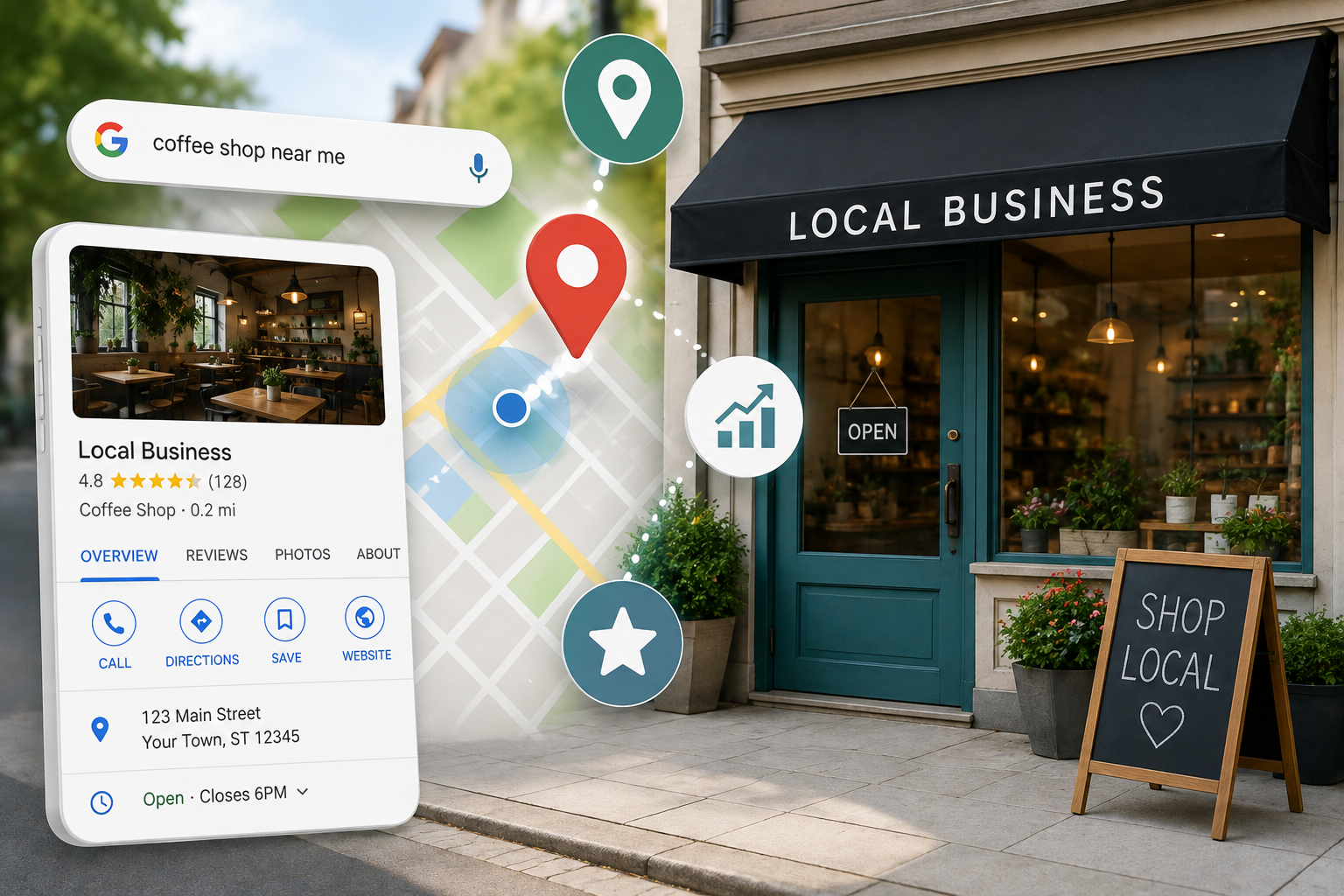
Local SEO Unique Guide for Businesses Who Stand Out
What Is Local SEO and How Does It Help Small Businesses Get Found?
Imagine somebody a few streets away needs exactly what your business provides.
They pick up their phone and search:
“accountant near me”
“emergency plumber Manchester”
“beauty salon open today”
“SEO company Birmingham”
Your business could be the perfect fit.
However, if it does not appear when that person searches, they may never know you exist.
That is where Local SEO comes in.
Local SEO is the process of improving a business’s visibility when people search for products or services within a particular location or service area.
For small businesses, this can be especially valuable because you do not necessarily need to compete with every company across the UK.
Instead, you want to become more visible to the people who are actually close enough, or relevant enough, to become customers.
So, how does that work?
What Is Local SEO?
Local SEO stands for Local Search Engine Optimisation.
It focuses on helping businesses become more visible for searches that have a local element.
Sometimes the location is obvious.
For example:
“solicitor Leeds”
or:
“coffee shop Bristol”
However, people do not always type a place name.
They may simply search:
“dentist near me”
or:
“car repair”
Google can use location information to help provide relevant nearby results.
These results can appear across both Google Search and Google Maps, which means Local SEO is about more than simply getting a normal website page to rank.
Google itself says customers searching for businesses or places near them can find local results in Search and Maps.
Therefore, Local SEO brings several parts of your online presence together.
Why Does Local SEO Matter for Small Businesses?
Because many small businesses do not need visitors from everywhere.
They need the right visitors from the right places.
For example, a plumber operating in Leeds probably gains very little from attracting hundreds of website visitors from Glasgow.
Likewise, a physiotherapy practice in Bristol is normally more interested in somebody searching nearby than somebody browsing from the opposite side of the country.
That makes local visibility commercially important.
A well-planned SEO for local business strategy focuses less on attracting traffic for the sake of a big number and more on connecting the business with people who could realistically become customers.
For many businesses, those people are already searching.
The challenge is making sure they can find you.
What Does a Local Search Actually Look Like?
Suppose someone moves into a new area and needs an electrician.
They may search:
“electrician near me”
Google could then show a combination of:
- Local business results
- Google Maps listings
- Business Profiles
- Organic website results
- Reviews
- Contact information
- Directions
- Opening hours
That searcher may be able to compare several companies without travelling anywhere or phoning around.
Therefore, your local search presence can form part of someone’s first impression of your business.
Before they even visit your website, they might already see your:
- Business name
- Reviews
- Photos
- Location
- Phone number
- Opening hours
- Services
Google describes Business Profiles as a way for eligible businesses to manage how they appear across Google Search and Maps, including information such as their hours, website, phone number and location or service area.
That is why Local SEO can become such an important part of small-business visibility.
Where Can Local SEO Help Your Business Appear?
Local visibility is not one single search position.
A potential customer can encounter your business in several places.
Google Maps
Someone may open Google Maps directly and search for a particular service nearby.
For example:
“restaurants”
“hairdressers”
“mechanic”
“accountant”
Maps can then show relevant businesses around that location.
Local Google Search Results
Google may also display local business results directly within a normal search.
Therefore, somebody searching for a service may see local listings before exploring traditional organic results.
Your Website
Your website can also appear for location-relevant searches.
For example, a company serving several areas may have useful information about its services and where those services are available.
This is where traditional SEO and Local SEO begin working together.
How Does Google Decide Which Local Businesses to Show?
This part is particularly useful for business owners to understand.
According to Google, local results are mainly based on three factors:
relevance, distance and prominence.
Those three words explain a surprising amount about Local SEO.
1. Relevance: Does Your Business Match the Search?
Relevance is about how closely your business matches what someone is looking for.
Imagine somebody searches:
“wedding photographer Nottingham”
Google needs to work out which nearby businesses actually provide wedding photography.
Therefore, clear information matters.
If your website and Business Profile clearly explain what you offer, Google has more context to understand your business.
Google specifically advises businesses to provide complete and detailed information because this can help it understand the business and match its profile to relevant searches.
This is why vague business descriptions can become problematic.
For example:
“We deliver innovative solutions tailored to your needs.”
It sounds polished.
However, it tells neither the customer nor the search engine very much.
Clarity wins here.
2. Distance: How Close Is the Business?
Distance is the geographical side of Local SEO.
If somebody is searching for a nearby service, their location can influence what they see.
For example, two people searching:
“coffee shop near me”
from different parts of London may receive different local results.
Likewise, if somebody includes a location in their search, Google can use that location when assessing nearby businesses.
Google explains that distance considers how far a potential result is from the searcher’s location. If the person does not specify a location, Google can use information it has about where they are.
This also means something important:
You cannot optimise your way out of geography entirely.
A company 150 miles away is not suddenly going to become the most logical result for every “near me” search simply because somebody added the town name 37 times to a page.
Location still matters.
3. Prominence: How Established Is the Business?
The third factor is prominence.
Broadly, this concerns how well known or established a business appears.
Google says prominence can be influenced by information it knows about a company from across the web. This can include links and other online information. Review count and review scores can also contribute to local ranking.
Therefore, Local SEO is not purely about editing your Google Business Profile.
Your wider digital presence matters too.
A business with an established website, genuine customer feedback and consistent information online creates a stronger overall presence than one that barely exists outside a single listing.
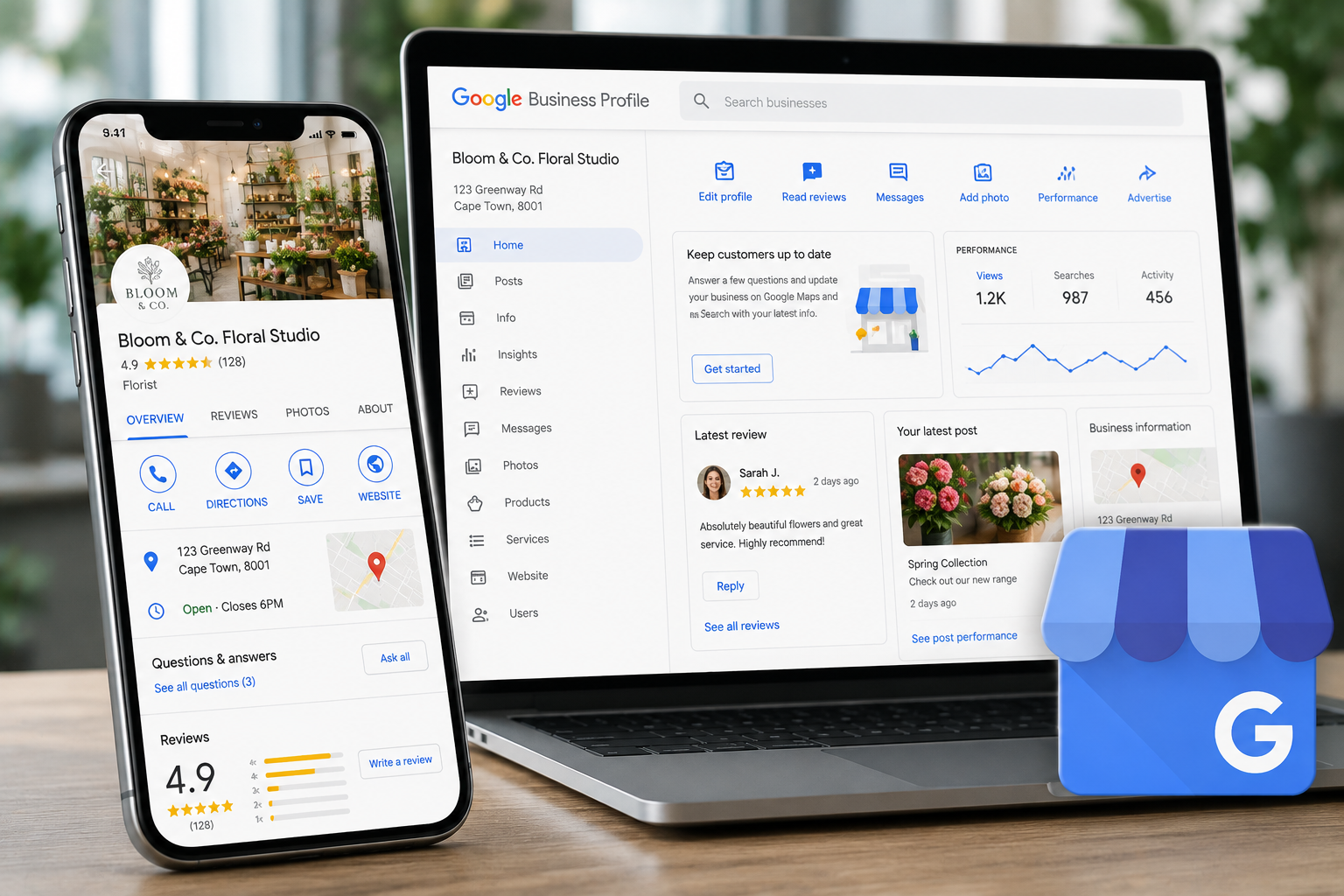
Is Google Business Profile the Same as Local SEO?
No, but it is an important part of it.
A Google Business Profile is the business listing that can appear across Search and Maps.
Local SEO is the broader strategy.
That distinction matters.
Think of your Google Business Profile as one important part of your local presence.
However, Local SEO may also involve:
- Your website
- Local landing pages
- Business information
- Reviews
- Local search terms
- Online mentions
- Links
- Directories
- Website content
- Technical SEO
- Location information
Therefore, Google Business Profile optimisation can support Local SEO, but optimising a profile alone does not necessarily create a complete local search strategy.
Why Is Accurate Business Information Important?
Imagine searching for a restaurant.
Google says it closes at 9pm.
You arrive at 8pm.
It is closed.
Not exactly the beginning of a beautiful customer relationship.
Accurate information matters because people use local search to make immediate decisions.
That includes information such as:
- Opening hours
- Address
- Telephone number
- Website
- Business category
- Service area
- Services
Google says complete and accurate business information makes a business more likely to appear in relevant local results.
Additionally, Google gathers business information from several sources, including official websites, business owners, users and other publicly available information.
Therefore, keeping your online information clear and consistent can help both customers and search platforms understand your business.
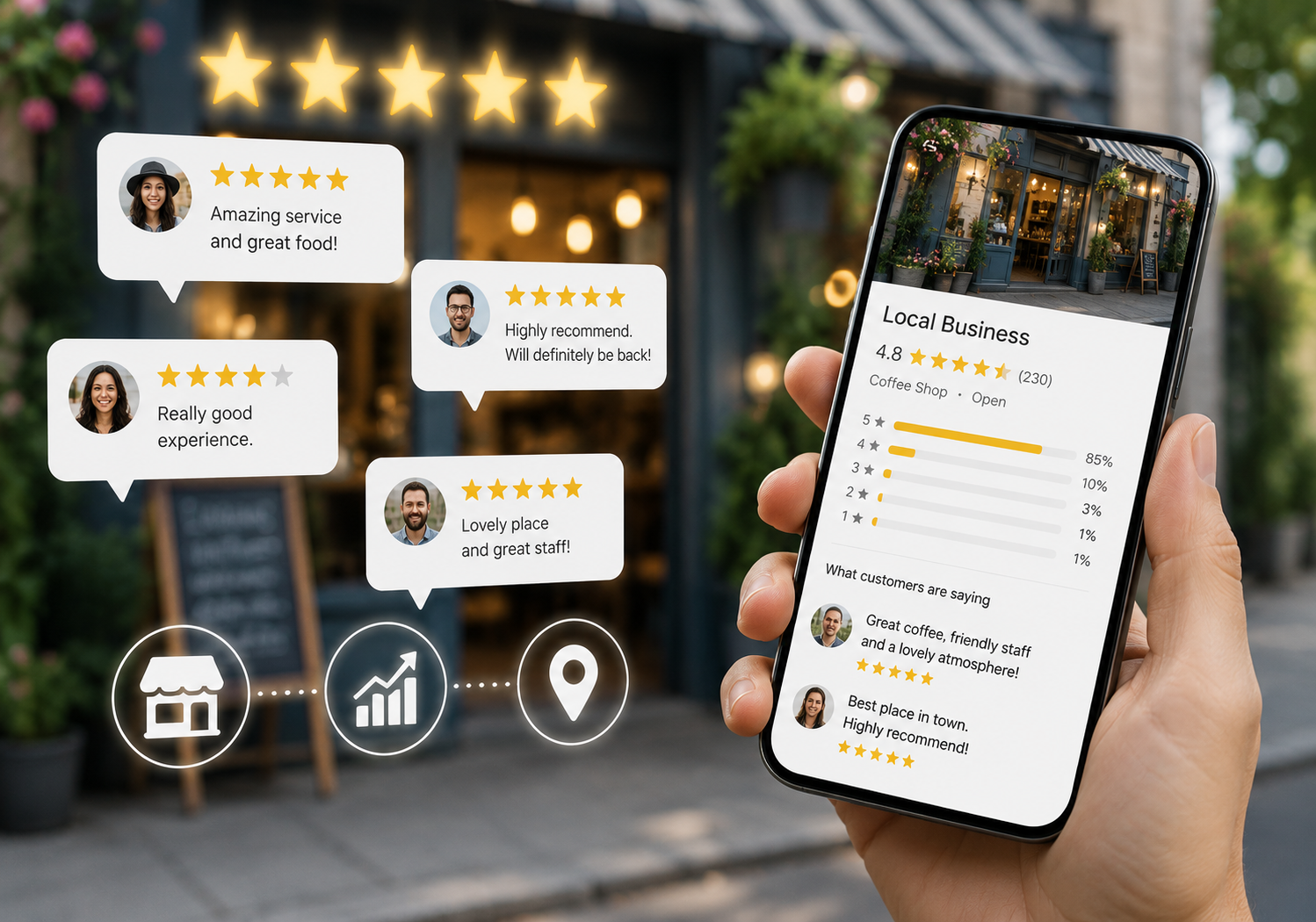
Why Do Reviews Matter for Local SEO?
Reviews serve two different audiences.
They Help Potential Customers
Imagine choosing between two nearby companies.
One has almost no customer feedback.
The other has a healthy collection of recent, detailed reviews.
Which one feels easier to trust?
Reviews help potential customers learn about other people’s experiences before making contact.
They Can Also Support Local Visibility
Google confirms that review count and review scores can contribute to local ranking.
However, this does not mean businesses should buy reviews or offer incentives for positive feedback.
Google prohibits incentivised reviews where free or discounted products or services are offered in exchange for people posting, changing or removing reviews.
Instead, businesses should focus on earning genuine reviews from real customers.
That is better for search visibility and far more useful for the person deciding whether to trust you.
Does Your Website Still Matter for Local SEO?
Absolutely.
It is easy to assume Local SEO is simply:
“Set up Google Business Profile and we’re done.”
However, Google itself notes that a business’s position in normal web results can contribute to local ranking, which means established SEO best practices still matter.
Your website also gives you far more room to explain:
- Your services
- Your areas
- Your expertise
- Your experience
- Customer questions
- What makes your business different
For example, imagine a potential customer searches for a specialist service.
Your Business Profile may help them discover your company.
However, your website may be where they decide whether you are actually the right company to contact.
Therefore:
Local SEO helps them find you.
Your website helps convince them.
The two should work together.
What Is Local Search Optimisation?
Local search optimisation is simply the process of improving the signals and information that help a business become more visible for geographically relevant searches.
However, it is not about plastering town names across every page.
Instead, a good local strategy considers where the business genuinely operates and what people in those areas are actually searching for.
For example, a company serving several nearby towns may need to communicate its service areas clearly.
However, creating dozens of almost identical pages with nothing but a different town name usually offers very little value to customers.
The strategy needs to reflect the real business.
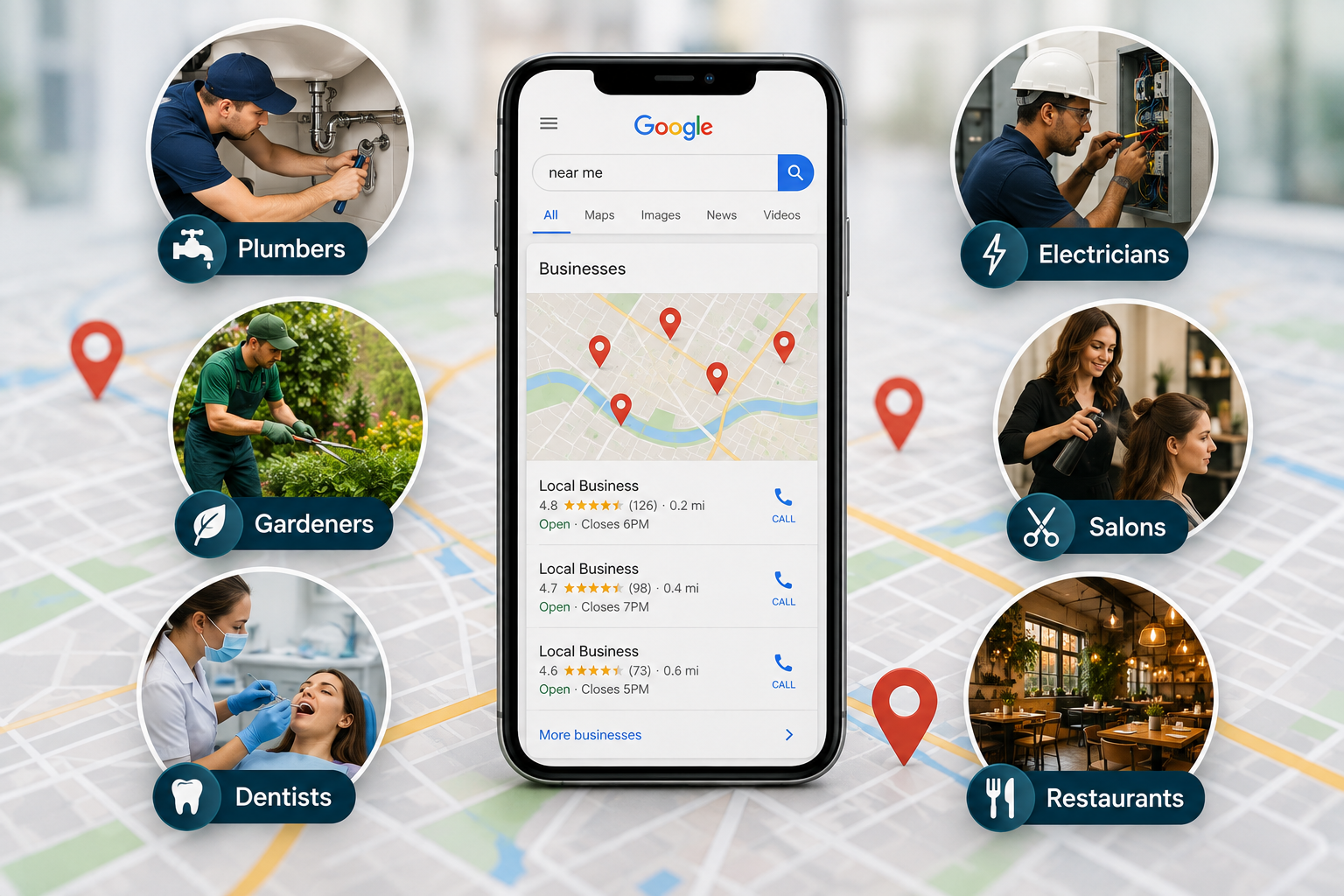
What Types of Businesses Benefit From Local SEO?
Local SEO is particularly relevant when location influences the buying decision.
For example:
- Plumbers
- Electricians
- Builders
- Gardeners
- Accountants
- Solicitors
- Dentists
- Physiotherapists
- Salons
- Restaurants
- Cafés
- Estate agents
- Cleaning companies
- Automotive businesses
- Local retailers
- Consultants serving defined areas
However, Local SEO is not limited to businesses with a shopfront.
Google Business Profiles can also be suitable for certain businesses that serve customers within local areas rather than receiving them at a traditional storefront.
Therefore, trades and service-area businesses can also have a strong local-search opportunity.
What About Businesses With More Than One Location?
This is where Local SEO becomes more strategic.
A company with several genuine locations may need to make it clear where each location operates and what services are available there.
For example, customers might search separately for:
“accountant Birmingham”
and:
“accountant Coventry”
The business needs to communicate those locations clearly.
However, this does not mean automatically creating hundreds of pages for every town within driving distance.
Good Local SEO optimisation services should look at the actual business footprint, search demand and customer behaviour before deciding how location targeting should work.
That is one of the reasons Local SEO should be planned rather than copied from a generic checklist.
Can Local SEO Help You Appear for “Near Me” Searches?
It can improve your local visibility, but no Local SEO service can guarantee that your business will appear first for every “near me” search.
Remember Google’s three main factors:
Relevance. Distance. Prominence.
Distance means the person performing the search matters.
For example, your business could appear prominently to someone two kilometres away but differently to somebody searching from the other side of the city.
Therefore, “near me” rankings are not fixed positions in the same way business owners sometimes imagine.
Local search results can change based on the searcher’s location and query.
Why Might a Competitor Appear Above You Locally?
This can be frustrating.
You know you offer the same service.
You may even feel your business is better.
Yet a competitor keeps appearing more prominently in local search.
There can be several reasons.
For example, the competitor may have:
- A more complete Business Profile
- Clearer service information
- Stronger traditional SEO
- Better local relevance
- More established online authority
- More customer reviews
- Stronger website content
- Better-known business information online
- A location more relevant to the person searching
Sometimes several factors work together.
Therefore, simply copying one thing your competitor does will not necessarily solve the problem.
A proper local search review looks at the wider picture.
Can Local SEO Bring in More Customers?
Potentially, yes.
However, Local SEO should not be presented as a magic customer tap.
Its purpose is to increase your chances of being discovered by people making relevant local searches.
That may create opportunities for:
- Website visits
- Calls
- Direction requests
- Bookings
- Enquiries
- Store visits
- Purchases
However, visibility is only the beginning.
If somebody discovers your business but sees outdated information, poor reviews, a confusing website or no clear explanation of your services, they may still choose a competitor.
Therefore, effective Local SEO marketing services should think beyond simply generating rankings.
The real goal is helping local visibility contribute to genuine business opportunities.
Is Local SEO Different From Normal SEO?
They overlap, but the emphasis is different.
Traditional SEO can target audiences across a much wider geographical area.
Local SEO places greater emphasis on geographical relevance.
For example:
A nationwide ecommerce shop may care about:
“buy office chair online”
A local furniture retailer may care more about:
“office furniture shop Bristol”
Both use SEO.
However, the second has a strong local component.
This is why SEO for local business usually combines traditional website optimisation with location-specific visibility.
Do Small Businesses Really Need Local SEO?
Not every business does.
However, if people choose your company partly because of where you are or where you operate, Local SEO is worth paying attention to.
Ask yourself:
Do customers search for my service plus a town or city?
Would someone reasonably search for my business using “near me”?
Do customers need to visit my location?
Do I travel to customers within a defined area?
Do local competitors appear prominently while my business does not?
If the answer is yes to several of those questions, Local SEO for small businesses may be particularly relevant.
What Should Small Businesses Focus On First?
This is where it is tempting to produce an enormous 83-step Local SEO checklist.
However, the right priorities vary considerably.
A restaurant with an incomplete Google Business Profile may have a completely different problem from a plumber with a strong profile but a weak website.
Likewise, a solicitor with multiple offices may require a different strategy from an independent beauty salon.
Therefore, the first question should not be:
“What Local SEO tricks should I try?”
Instead, ask:
“What is currently stopping local customers from finding or choosing my business?”
Once you understand that, the right priorities become much clearer.
What Do Local SEO Services Help With?
Professional Local SEO services generally look at the wider local visibility picture rather than one isolated listing.
Depending on the business, that can include areas such as:
- Local search visibility
- Google Business Profile
- Website performance
- Local landing pages
- Search behaviour
- Business information
- Reviews
- Competitor visibility
- Local authority
- Website structure
- Tracking and measurement
However, the exact work should depend on what the business actually needs.
This is also why it is worth being cautious about generic Local SEO packages that provide exactly the same activity to every company.
A good local SEO service should solve your visibility problems, not simply tick boxes.
How Do You Know If Your Local SEO Needs Work?
Some warning signs are fairly easy to spot.
For example:
- Your business rarely appears in local searches
- Competitors consistently appear above you
- Your Google Business Profile contains outdated information
- You have very few reviews
- Customers struggle to find your location
- Your website does not explain where you operate
- Your service areas are unclear
- Your local website traffic is weak
- Your business does not appear in Google Maps searches you would expect it to
However, looking at one search from your own phone does not tell you everything.
Local results can change depending on location and search behaviour.
Therefore, a proper assessment looks across multiple signals rather than relying on one screenshot.
Local SEO Is Really About Being There When It Matters
The easiest way to understand Local SEO is to forget the marketing jargon for a moment.
Someone nearby needs something.
They search for it.
Businesses appear.
They compare their options.
Then they choose.
Local SEO is about making sure your business has a better chance of being present during that journey.
For a small business, that can be incredibly valuable.
You do not necessarily need the entire internet to know your name.
You need the right people in the right places to find you when they actually need what you offer.
And that is exactly where local search visibility becomes powerful.
Is Your Business Being Found Locally?
If competitors keep appearing in Google Maps and local search while your business seems to disappear into the scenery, there is usually something worth investigating.
At BW Digital, we look at how businesses appear across Google Search, Google Maps and their wider local search presence.
Rather than applying the same Local SEO optimisation services checklist to every business, we look at what may actually be limiting your visibility.
That can include your website, Google Business Profile, local content, business information, reviews, competitors and wider search presence.
From there, we can identify which opportunities are actually worth prioritising.
Because the important question is not simply:
“Do I need Local SEO?”
It is:
“When somebody nearby needs what I offer, can they find me?”
Frequently Asked Questions About Local SEO
What Is Local SEO?
Local SEO is the process of improving a business’s visibility for searches connected to a particular location or service area. It can help eligible businesses appear across Google Search, Google Maps and other locally relevant search results.
How Does Local SEO Help Small Businesses?
Local SEO can help small businesses become more visible to nearby people searching for their products or services. This can create opportunities for website visits, calls, enquiries, bookings, directions and in-person visits.
What Are Local SEO Services?
Local SEO services are professional services focused on improving a company’s local search presence. Depending on the business, they may involve Google Business Profile optimisation, website SEO, local content, reviews, business information and competitor analysis.
What Are the Main Local SEO Ranking Factors?
Google says its local results are mainly based on relevance, distance and prominence.
Is Google Business Profile Important for Local SEO?
Yes. A verified Google Business Profile allows eligible businesses to manage important information shown across Google Search and Maps, including location or service area, opening hours, website information and contact details.
Do Reviews Help Local SEO?
Yes. Google states that review count and review scores can contribute to local search ranking. Reviews can also help potential customers evaluate a business before making contact.
Can Local SEO Help With Google Maps?
Yes. Local SEO can improve the information and signals Google uses when determining relevant businesses in Maps and local search. However, no provider can guarantee a particular Maps ranking.
What Is SEO for Local Business?
SEO for local business combines general search optimisation with a stronger focus on geographical relevance, local customers, Google Maps, Business Profiles and location-specific searches.
Is Local SEO Only for Businesses With Physical Shops?
No. Certain service-area businesses that meet Google’s eligibility requirements can also use a Google Business Profile and benefit from local search visibility.
Can a Local SEO Service Guarantee First Place?
No. Google says there is no way to request or pay for a better organic local ranking. Local results depend mainly on relevance, distance and prominence, alongside other signals.
Is Local SEO Worth It for Small Businesses?
It can be particularly valuable when customers choose a business based partly on location. However, the potential value depends on the business, competition, search demand, service area and existing online visibility.
Share this article
Latest articles
November 1, 2026

November 1, 2026
November 1, 2026
A quick overview of the topics covered in this article.